
Digging Into Roots: How to Harvest Spruce Roots for Basketry
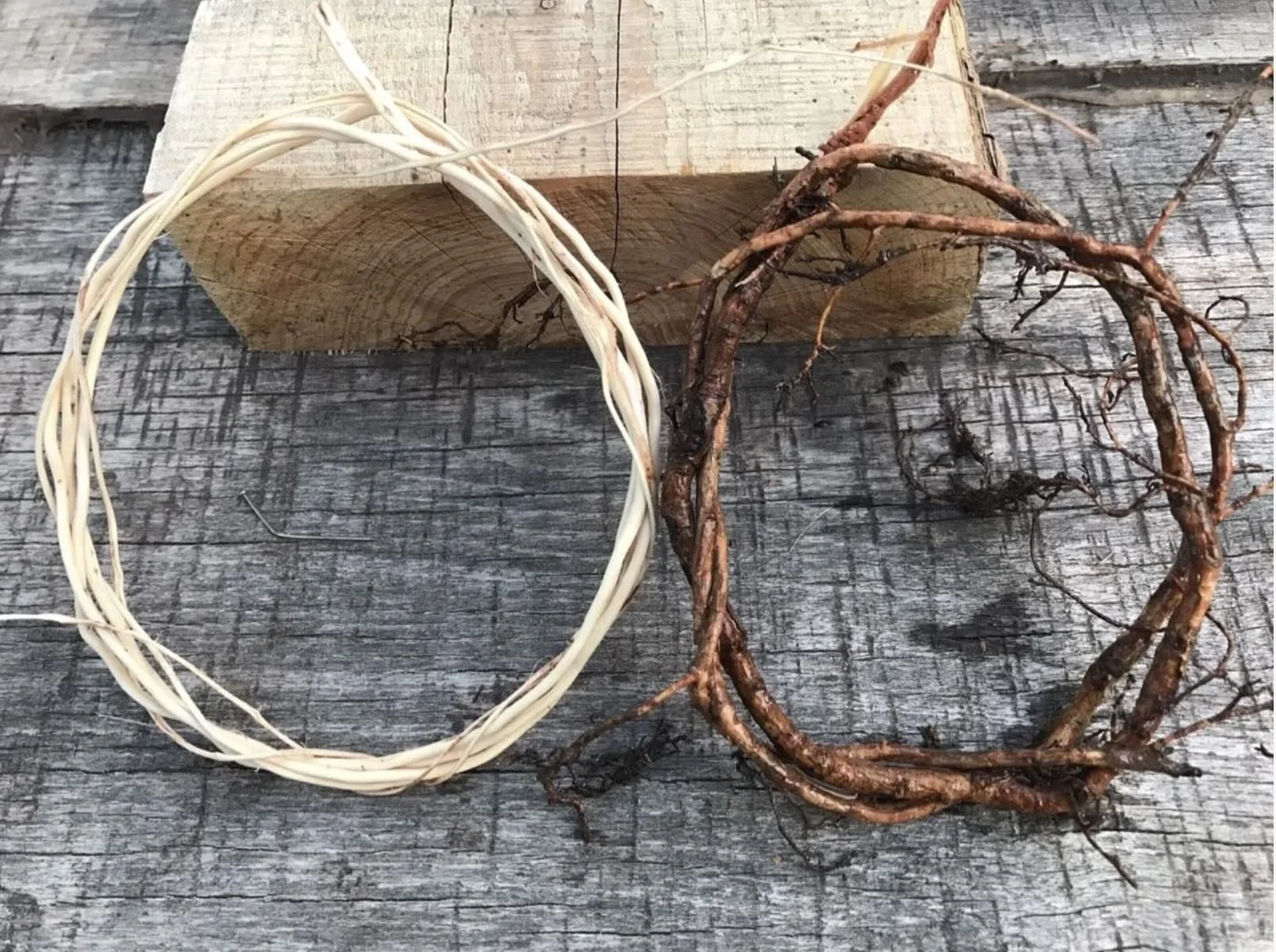
I have been on a journey exploring wild world of making baskets with plants for some time now. I've gotten to know the trees, vines, and leaves of many different species, which I now consider my friends and neighbors. However one category has always eluded me: that which inhabits the vast underground of the forest… roots! Perhaps it's just that I've been busy focusing on other plants parts or maybe it's that they hide out of sight, escaping my notice, but roots have been the last category for me to explore.Well, now that's changed! Below is a description of my first root harvesting venture, through the eyes of a beginner. As I continue learning about using roots in basketry I'm sure my knowledge will expand and I will add to this post or create another one. I've also done some research and will include links to those who have inspired me to take it up. When I started on this process I had lots of questions, so that's how I'm going to lay out this article. My questions and the answers I have found so far for them.
What kind of roots can be used for basketry?
From my research I've gathered that most, or maybe any, type of conifer roots can be used. I've read specific references to fir, spruce, and western red cedar. So far my only hands-on experience is with white spruce, Norway spruce, and white pine. White Spruce tends to be lauded as the best that has been my experience as well. It is the focus of this post, but I have also had good success with both Norway spruce and white pine although both are not as strong. If they are all you have then go for it-don’t be discouraged!
What are spruce roots used for in basketry?
Roots are amazingly strong and flexible. They are also quite thin and a beautiful white color. They are typically used for lashing the rims onto both folded bark baskets and traditional birch bark baskets. Indigenous groups of the Mid Columbia Valley out west also use them for both foundation in coiled baskets and split as sewing and weaving strands. However, you could also use them in a sculptural way if you wanted.
How can you identify a spruce tree?
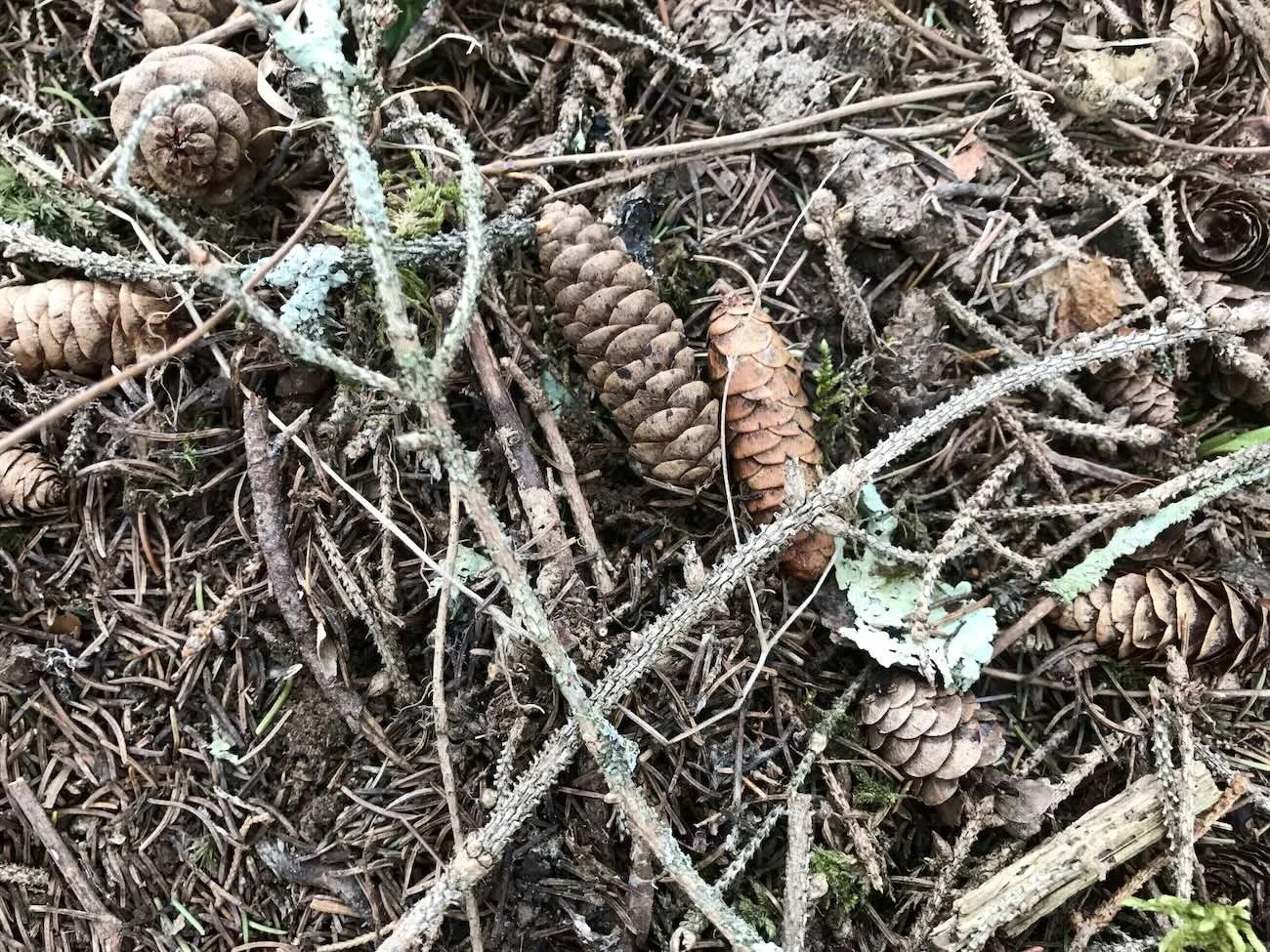
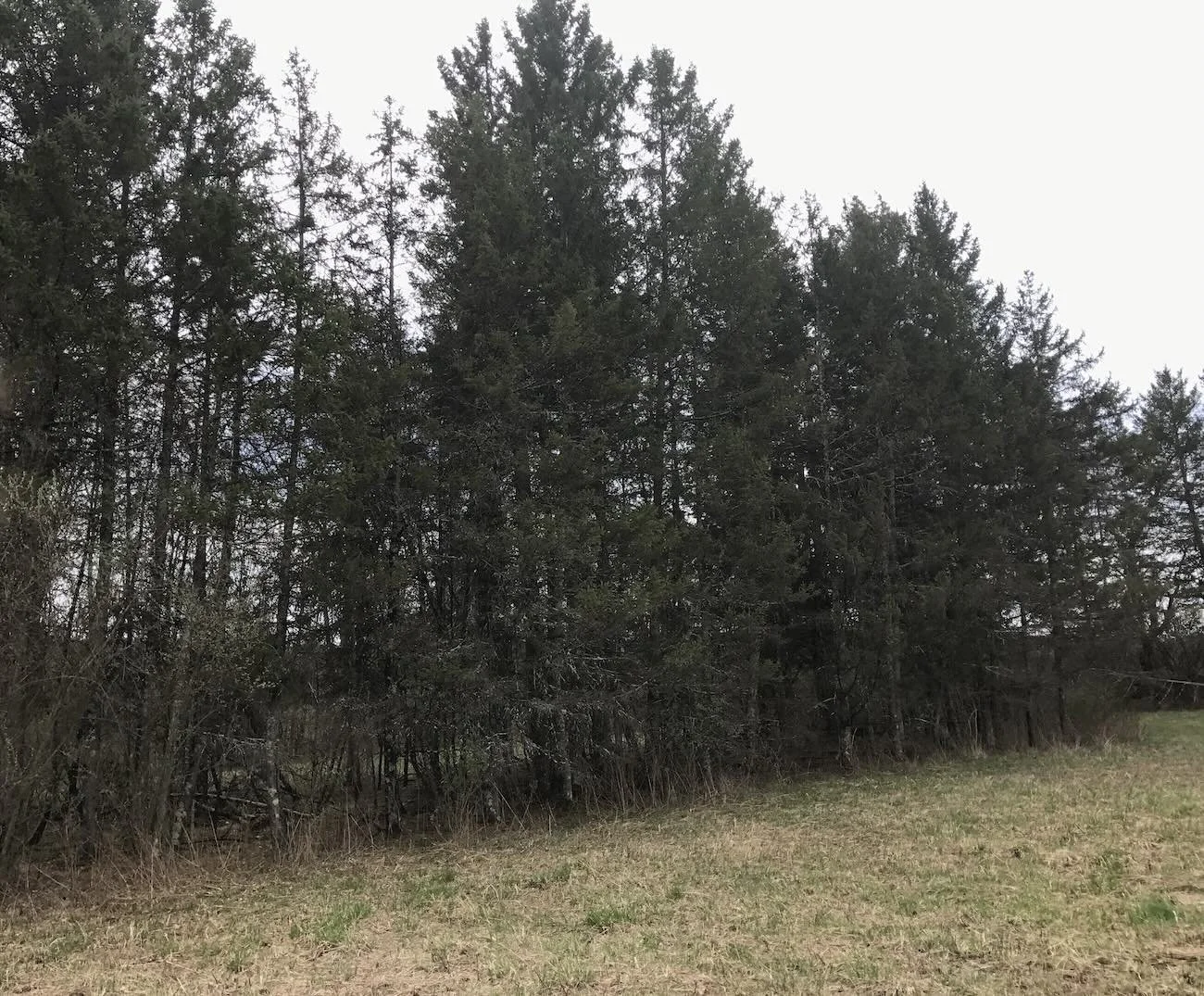
Spruce is a type of coniferous evergreen tree. You can tell it from pine and fir because it's twigs are rough and every needle leaves a raised scar when it falls off. You can tell it is a white spruce vs norway because it's cones are small (1 1/4" long approx)Here is some more info on identifying spruce.
What time of year can you harvest roots?
As you may know, many basket materials must be harvested at a certain time of year. What I've gathered so far about spruce roots is that the spring and summer are best. I believe this is mainly because the ground is not frozen and they are easier to harvest. I think it's possible you could harvest any time of year that you can actually dig them up! I'm curious if they are more or less flexible/strong when harvested at different times...
How can I identify a good place for harvesting spruce roots?
So you have a spruce tree in your front yard… Is it possible to harvest the roots there? The answer is yes, but it's definitely not ideal. You want a place where there are a lot of spruce trees growing together. Imagine a beautiful open forest filled with spruces where the ground is soft rolling and littered with needles and soft layers of duff or sandy soil where the roots can stretch and grow long. The area I found a harvest was in a neighbors backyard. The previous owner had planted three rows of spruce trees-- maybe about 25 in total. They weren't very well spaced apart and the ground between them was filled with roots and a clay soil. Not ideal, but it worked. The roots my harvesting buddy and I got were not incredibly long or straight, but I am happy with them anyway and will continue to search for forest with better patches in the future.
How do you harvest the roots?
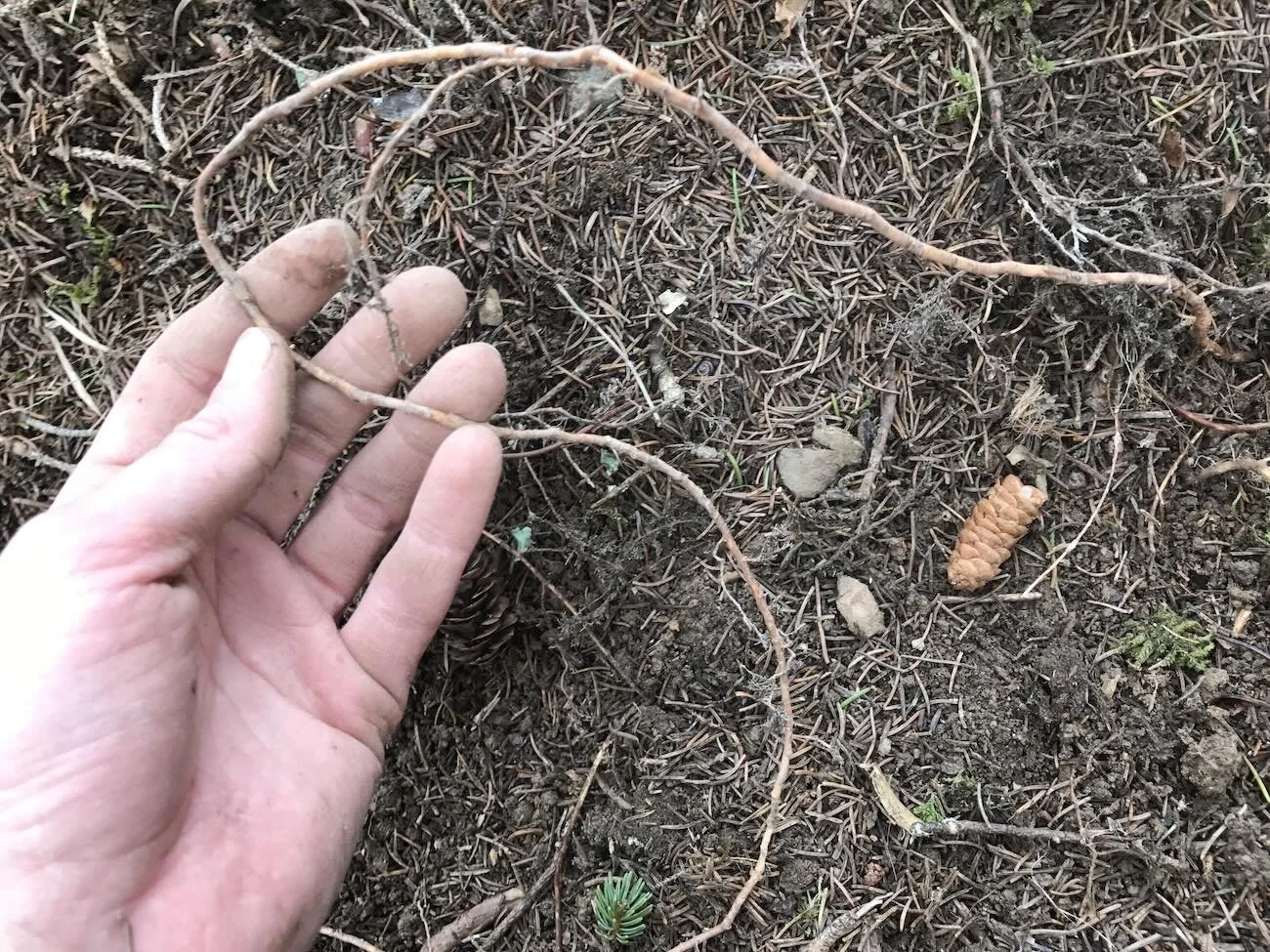
You can use a had trowel or digging stick, but my harvesting partner and I preferred to just use our hands! Be prepared to get dirty. This is what I love about basket weaving. Getting hands-on, putting your hands in the earth and actually experiencing it. Spruce roots tend to grow along the top layer of soil so you don't have to dig too deep to get them. Start by clearing a layer of duff or dirt a couple feet away from the tree. In my case the trees were quite close together so I just had to do my best. As you begin to dig in the earth you'll start to run across a network of intersecting roots. Look for ones that are around a pencil width, or a little bigger. Once you find one that looks promising begin to follow it. One of the lessons I've learned from roots so far is patience. If you tug and pull it will just break. You have to follow it gently, clearing soil away. After you've unearthed the root cut it at it's source. During this process you've probably run across many other promising looking roots. Begin to follow those as well. Coil up each length of root that you find. The longest I got was only 3 1/2 feet, but I believe longer is possible in a better spot. Be gentle with the tree. These roots give it life and while harvesting in one area is not likely to do damage to the tree, we want to respect it.Once you've gathered a few roots from an area, cover back up the remaining roots with soil and layers of forest floor. Don't forget to thank the tree :-)
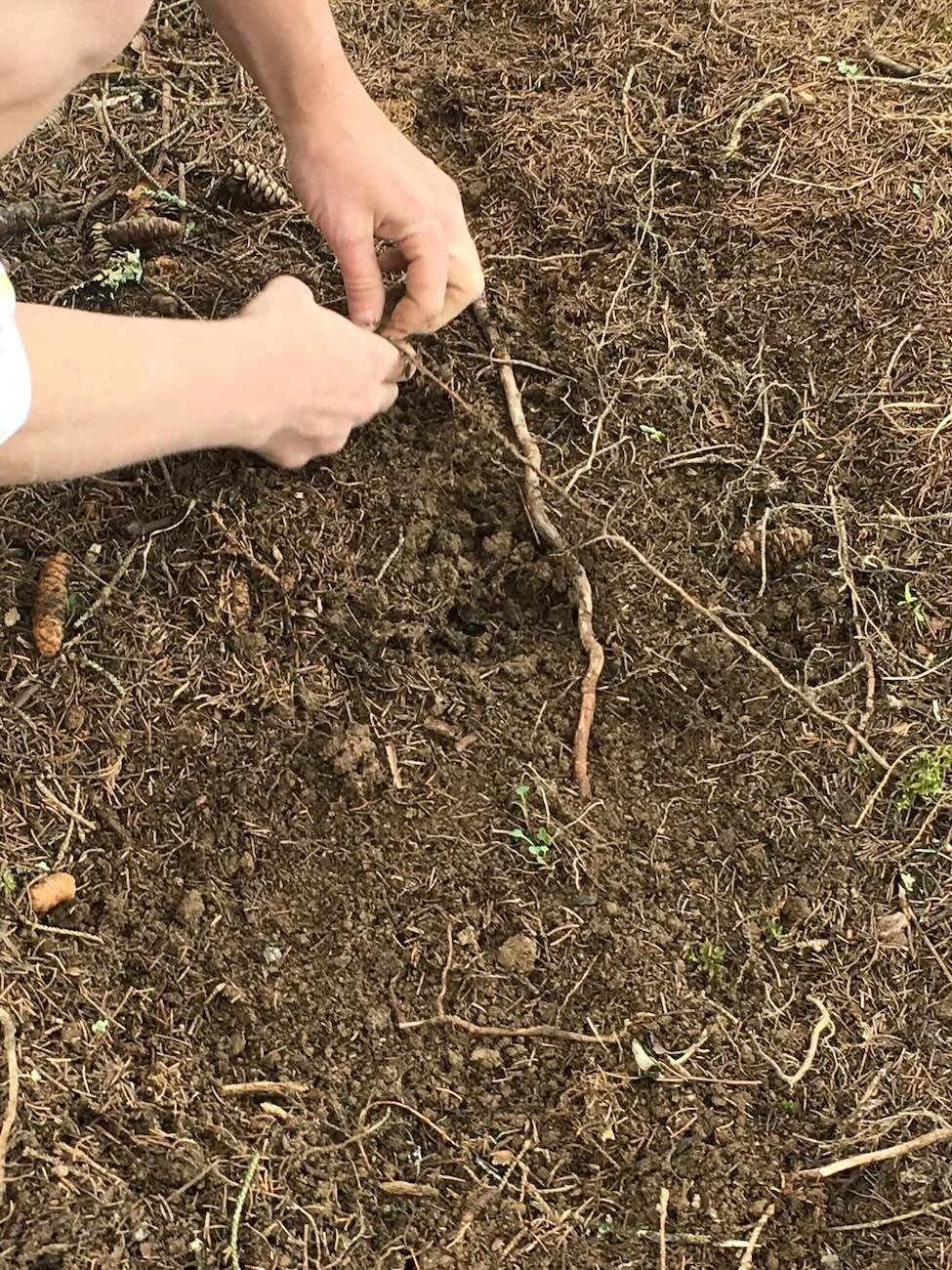
Clearing an area to find roots.
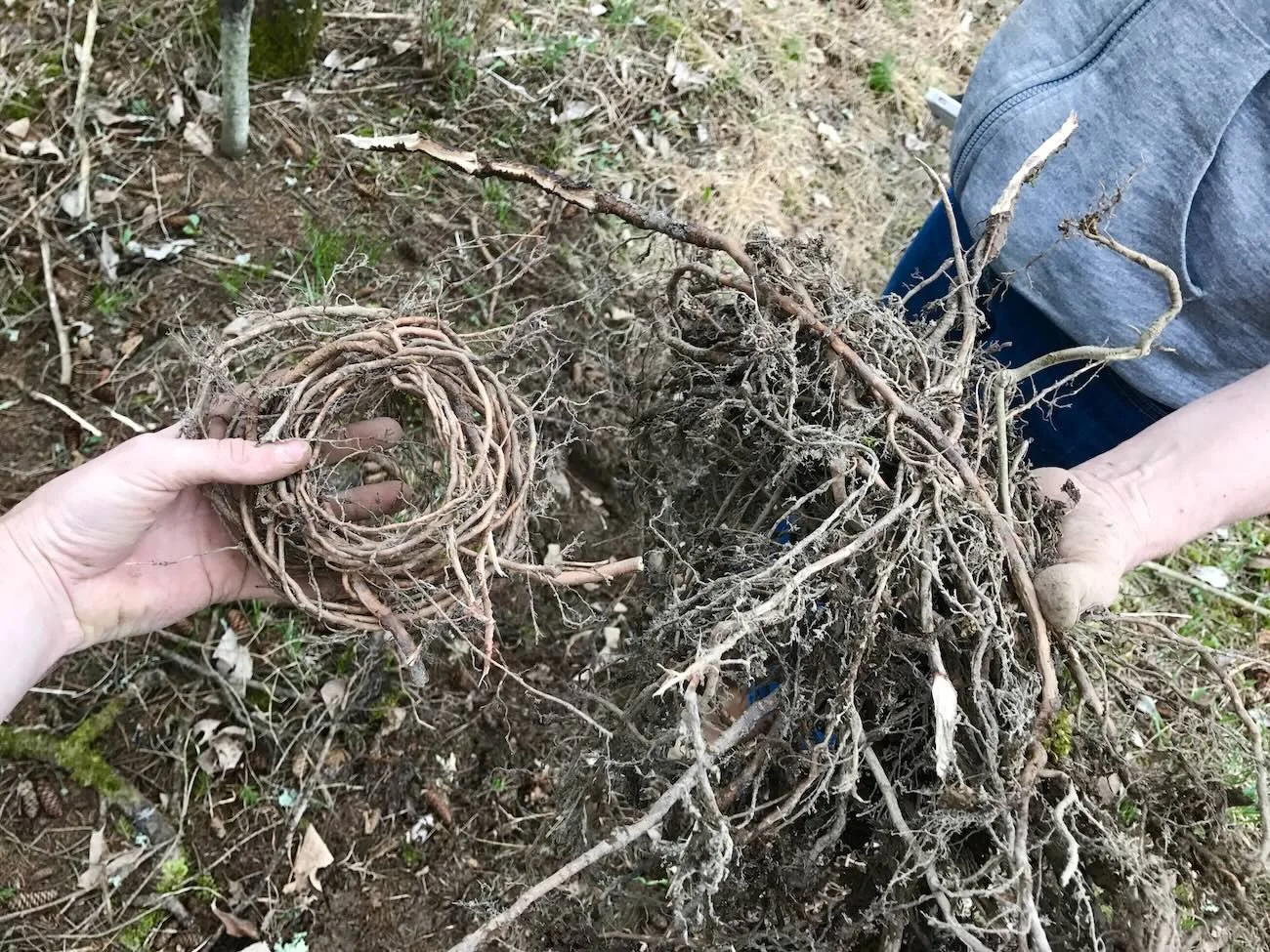
How to process spruce roots
Spruce roots consist of a beautiful white inner layer, and an outer layer. To process them you need to remove the outer layer, which includes a thin skin, many little side rootlets and a lot of soil. I've read that you have a couple of days to do this, but I prefer to do it right away. I experimented with letting some dry and then soaking them to remove the outer layer and it was WAY harder and took a lot longer. Do it right away for best results.To remove this outer layer it's easiest to pull the root through a tight space. I created mine by hammering two nails into a table in the shape of a V. You can also cut a notch in a stick, or come up with any number of creative ways to do this.Begin by pulling the root through the tightest space of the V until an area of the skin starts to loosen. You'll know when you've revealed the inner part. Don't be afraid to really dissect it so that you understand how the root is composed. Once you've revealed the white inner part you can begin to peel the outer layer off like a banana peel. You'll start to get a sense if even a little bit of the sheath is left on. You want to remove it all, and then coil up the root for future use. As always, stored in a cool dry place and when you're ready to use it you can soak it, split it and then you're ready to weave!
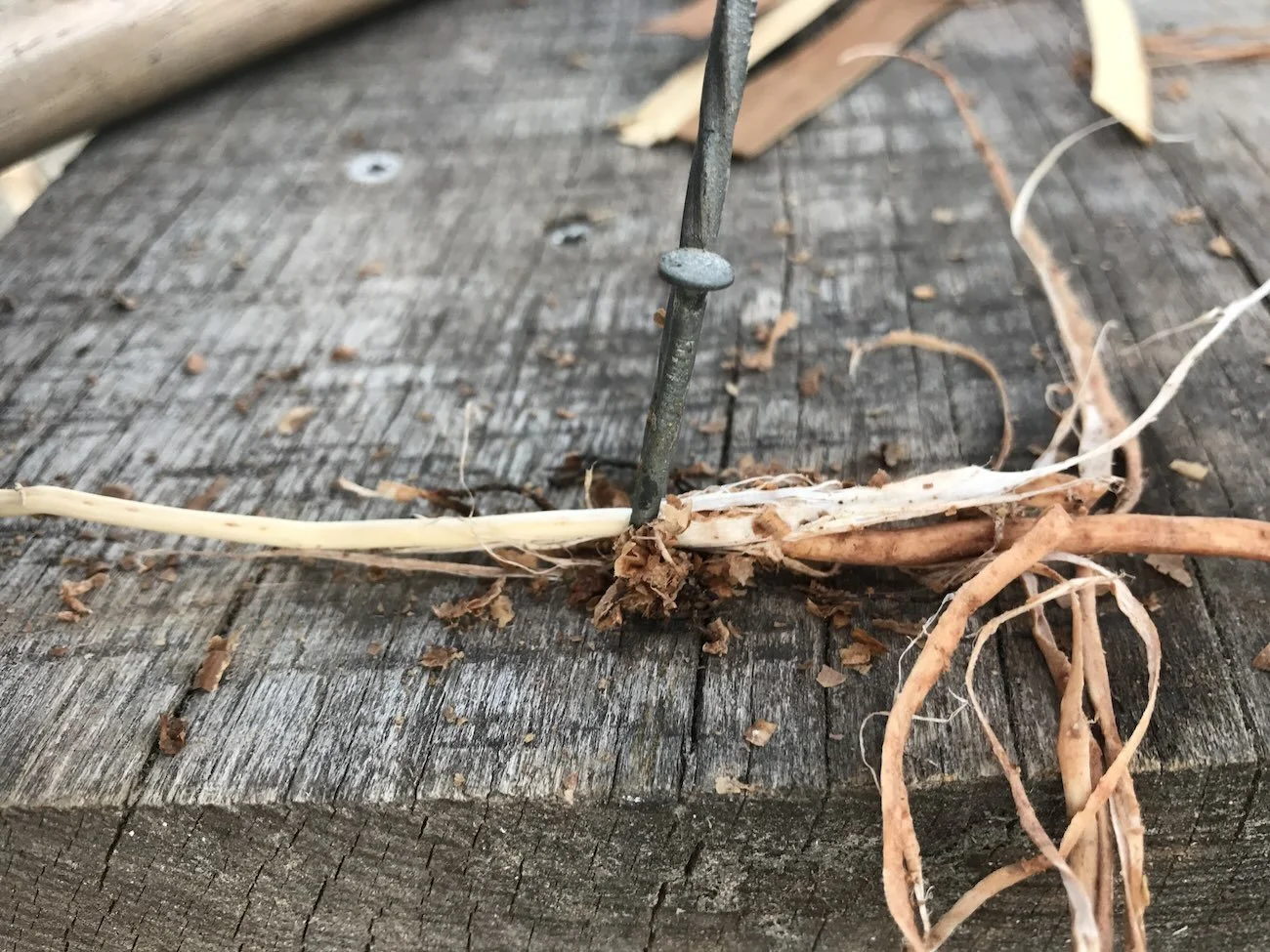
How to use roots in baskets
Spruce and other roots are great in twined baskets, as sewing/lashing strands in folded bark baskets and as sewing strands in coiled baskets. Because of their strength I often choose them for sewing over other similar sized materials. I’m sure there are many more creative ways for them to be used as well!
Check out Vladimir Yadish's excellent book for birch containers with root lashing. I've learned a lot from reading his accounts and highly recommend getting this book. Meanwhile here are a few pictures of some recent baskets I've made using my newly harvest spruce roots.
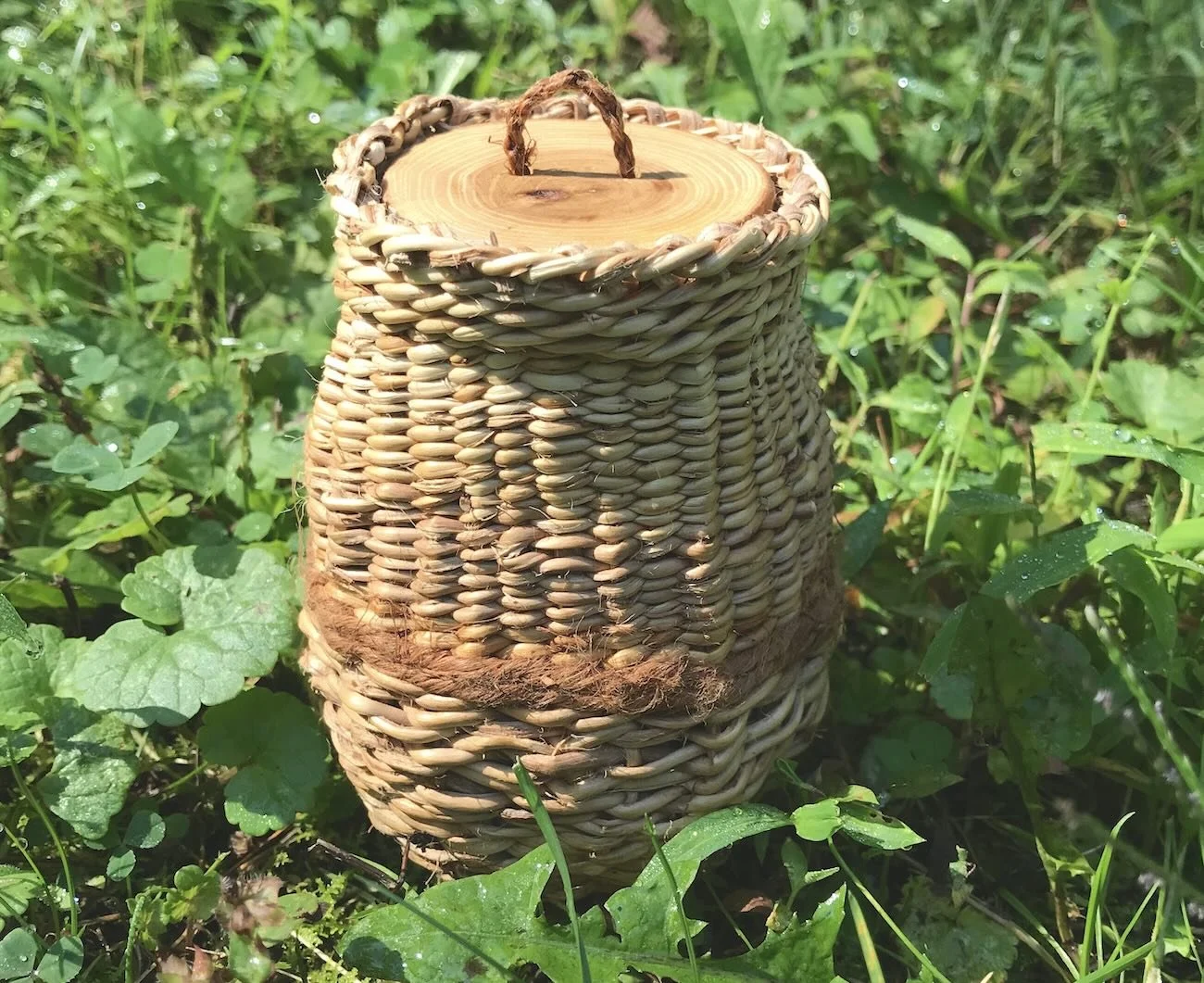
Twined root basket with a wood top.
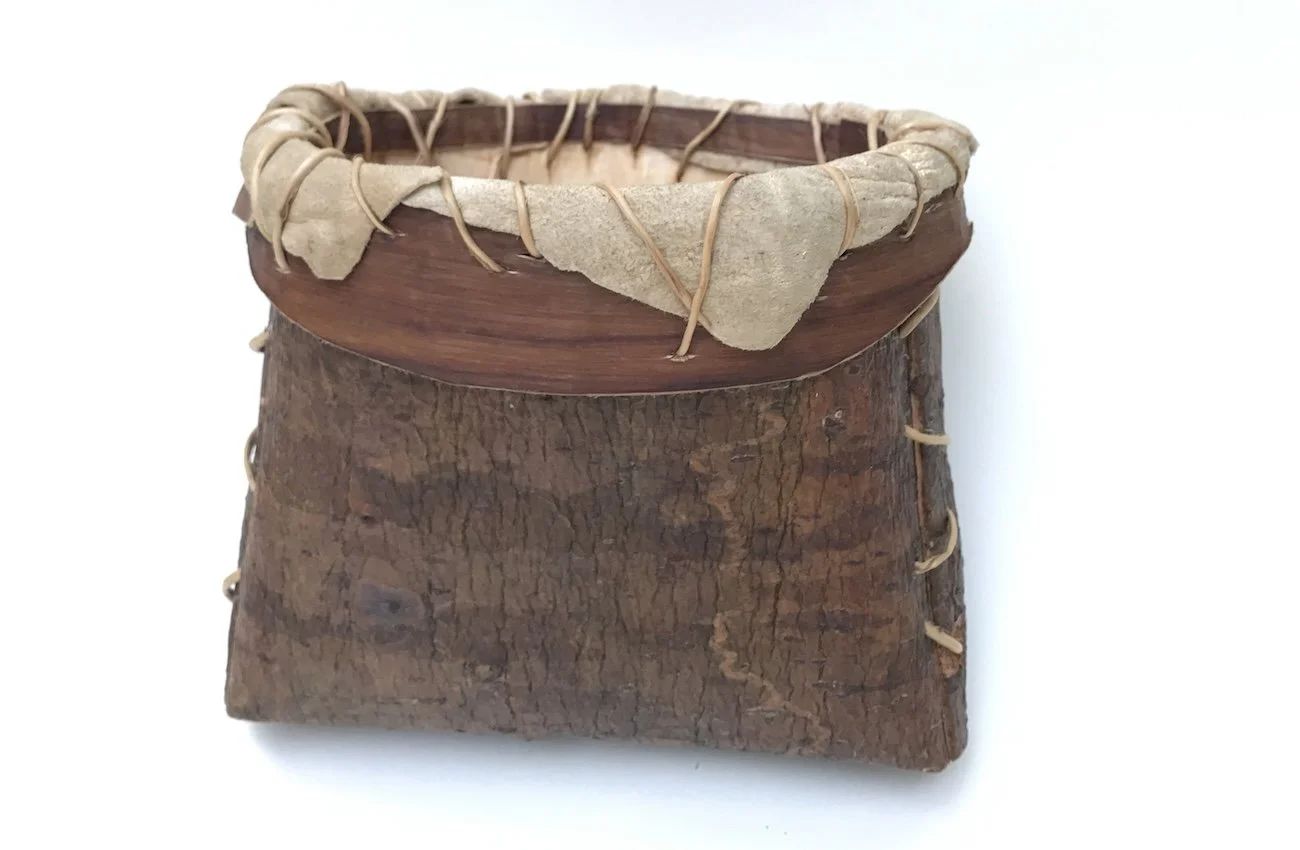
Pine bark sewn with spruce root and buckskin rim.
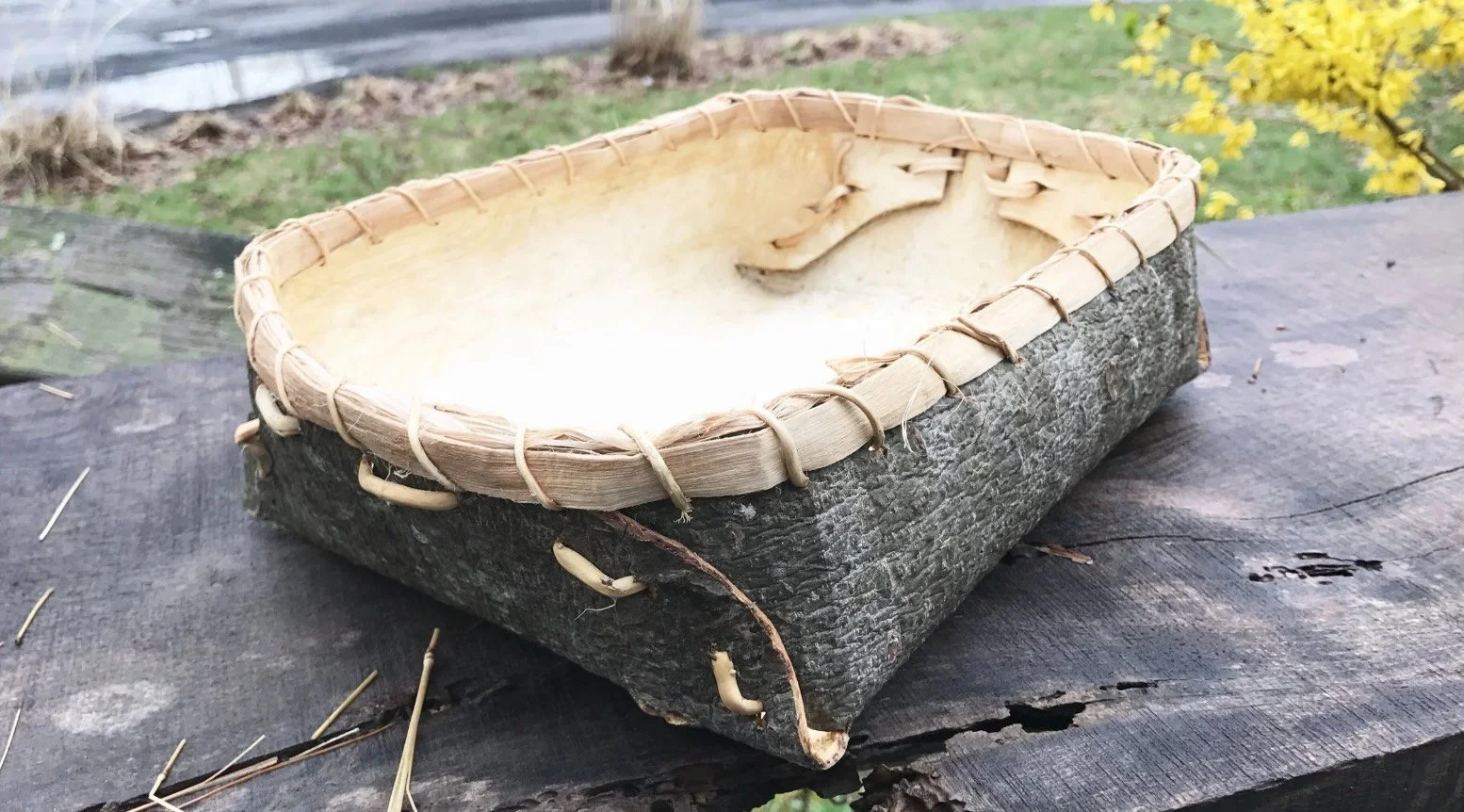
White pine bark sewn with pine root.